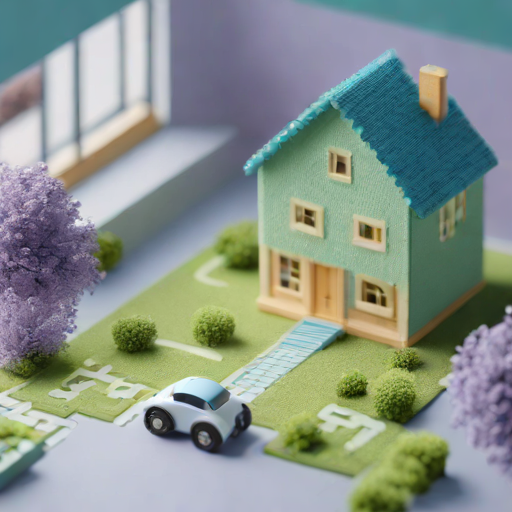
Robotics Is Becoming a Real Estate Story
Robots do not enter the world evenly. They enter places where the floor is mapped, the tasks are repeated, and the cost of failure is manageable. That makes real estate part of the robotics stack.
Tap once to read the main idea, proof path, risk, and next watch signal without leaving the page.
Factories, warehouses, hospitals, and homes are becoming test environments for embodied intelligence.
Robots do not enter the world evenly. They enter places where the floor is mapped, the tasks are repeated, and the cost of failure is manageable. That makes real estate...
Robots perform narrow jobs in warehouses, factories, and labs.
Robotics launches, Warehouse automation reports, Reddit discussions
Warehouses are the first terrain
Warehouses are legible to machines: repeated routes, known inventory, controlled access, and economic pressure to automate physical work. They are not just buildings; they are training grounds where robots learn to move through predictable space, handle repeated tasks, and prove that embodied AI can create measurable labor savings.
Hospitals require softer intelligence
Healthcare settings need machines that navigate emotion, trust, privacy, and unpredictable human movement. The technical bar is different from industrial automation. A robot in a hospital cannot only be efficient; it must be quiet, legible, careful around people, and trusted inside spaces where stress is already high.

Homes are the final boss
Homes are messy, private, and different from one another. A robot that can operate reliably inside a home needs world understanding far beyond scripted movement. It must understand objects, habits, children, clutter, fragile items, and the emotional boundary between helpful machine and unwanted presence.
Scenario Board
Task robots
Robots perform narrow jobs in warehouses, factories, and labs.
Service zones
Hospitals, hotels, and campuses create robot-friendly operating zones.
Home pilots
Premium home robots appear, but reliability remains the hard constraint.
Sources attached to this story.
What to do with this signal.
Cheaper sensors, better imitation learning, and investor pressure are moving robots into constrained environments.
 Google Search ProfilesJun 08, 2026 / Space Civilization
 Fast News: Inference cost moves the bottleneck beyond the GPUJun 08, 2026 / Fast News
 Fast News: Future biology turns conservation into engineered field infrastructureJun 06, 2026 / Fast News